Why our silk pillowcase has no zipper — and no seams
Most silk pillowcases close with a hidden zipper, and most of them are described as having French seams. We removed both. This page explains exactly why, what we gained, and the one place where our choice is genuinely worse.
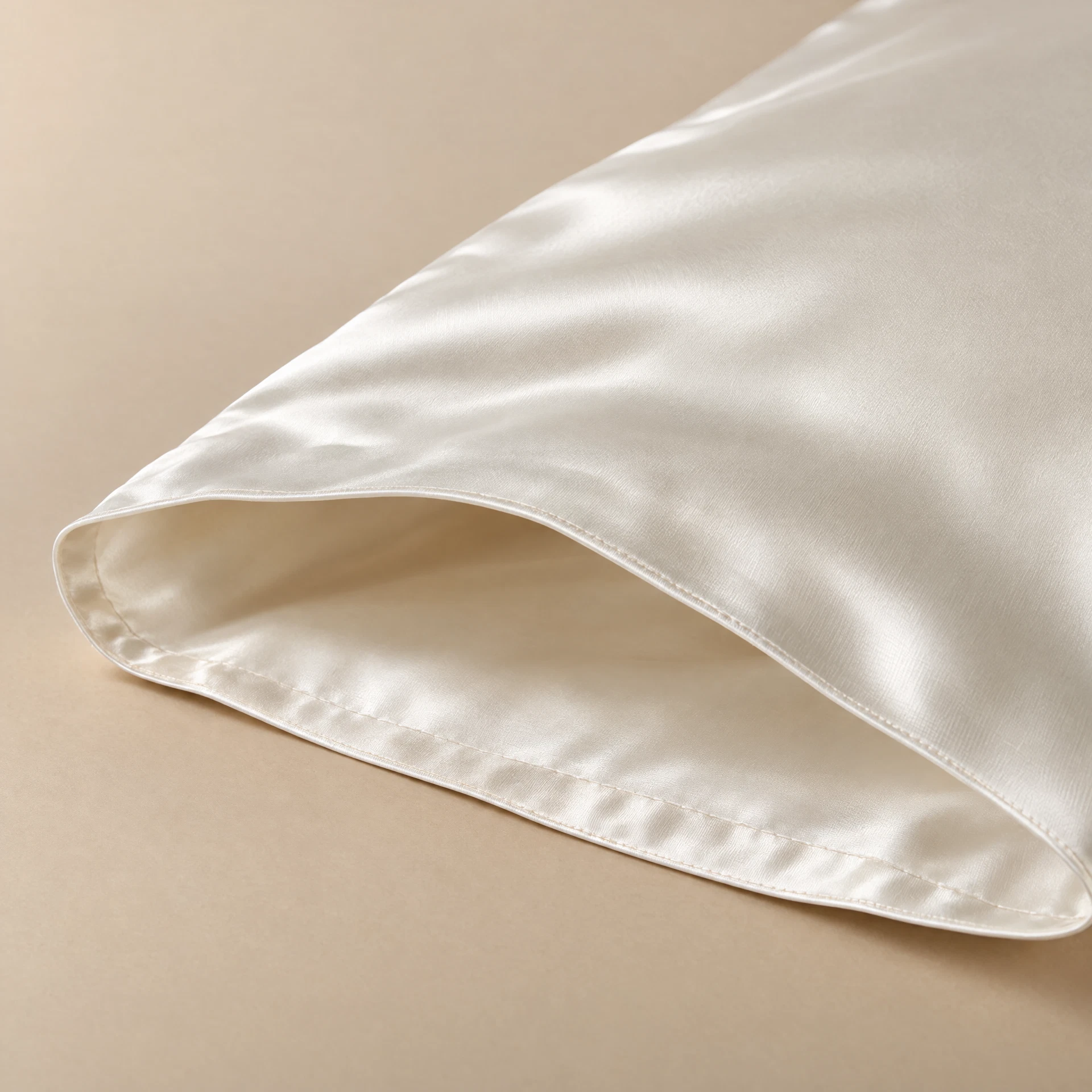
A zipper is the only part of a pillowcase that can break.
Silk is a protein fibre and it is remarkably tough. A 25-momme charmeuse weave takes years of weekly washing before it thins, and it does not have a mechanism that can jam. A zipper does. It is the single moving part in the product, and it is made of the two materials that tolerate laundering least well: metal and nylon.
Here is what actually happens to it, in order.
The detergent gets to work
Laundry detergent is designed to break down oils and proteins — that is the whole point of it. Fabric softener leaves a waxy residue. Together they build up inside the slider channel, and the pull starts to feel gritty rather than smooth.
Heat and tumbling deform it
Nylon coil zippers soften in a warm dryer and can take a permanent set in a bent shape. Metal sliders corrode. Silk, by contrast, is damaged by heat far less than people assume at a cold-wash temperature — the zipper is the fragile part, not the fabric.
The teeth start catching things
This is the part you notice personally. A zipper at the edge of a pillowcase sits exactly where hair rests and where your cheek turns. The whole reason people buy silk is to reduce friction on hair and skin, and a zipper is the one element on the case that grabs instead of glides.
The slider seizes
Eventually the pull sticks. Sometimes it is a month, sometimes it is two years. When it happens the pillowcase is finished — you cannot open it to remove the pillow, so you cannot wash it, and you cannot use it. Good silk goes in the bin because a component worth pennies failed.
A zipper quietly breaks the "100% silk" claim.
Zipper teeth are sewn onto a woven tape, and that tape is polyester or nylon. It has to be: silk tape would not hold the teeth under load. So on a pillowcase described as 100% mulberry silk, the closure is not silk.
In practice that means a strip of synthetic fabric sitting right at the edge your face touches, on a product whose entire appeal is that it is not synthetic. Nobody is being dishonest about this — it is simply how zippers are made, and most brands are reasonable to accept the trade-off. We just did not want to.
The same logic applies to thread. Standard garment thread is polyester. On a seamed pillowcase it is the thread, not the silk, that fails first.
Seams are where fabric fails, and where ridges form.
A seam is a line of needle perforations through the weave, plus a row of thread, plus a doubled-over seam allowance. Every one of those is a weakness:
- Perforations concentrate stress along a single line. That is where a pillowcase tears when it finally tears.
- The thread is usually polyester and is the first thing to pull or fray.
- The allowance adds a ridge. On a 25-momme silk it is a firm ridge, and if it ends up under your cheek you will feel it.
- Puckering appears after a few washes as the silk and the thread shrink at different rates.
Weaving the case as a single tube removes all four problems at once. There is no wrong side, no ridge, and no stitching anywhere on the sleeping surface.
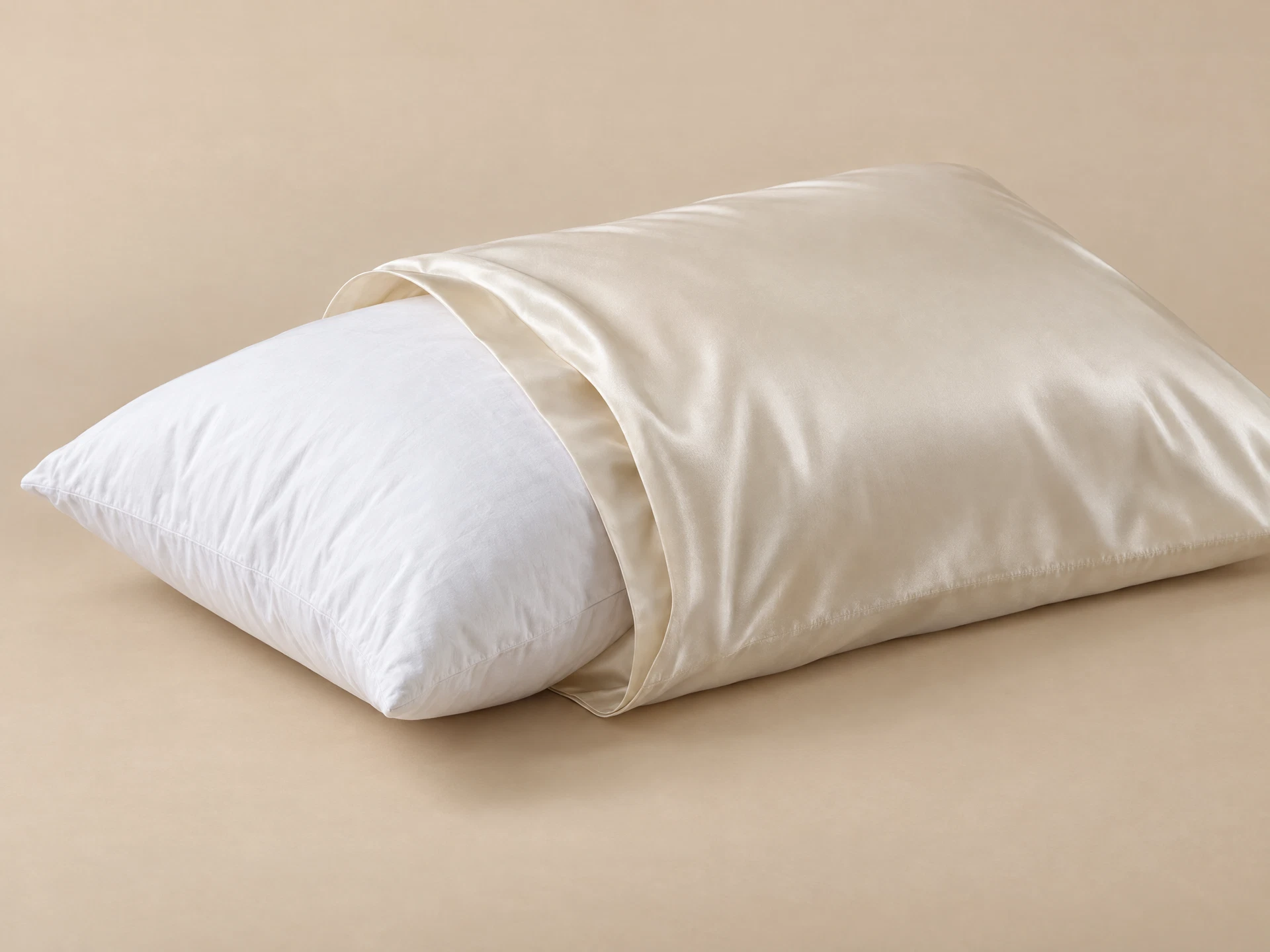
One continuous tube of silk, open at one end.
No zipper. No buttons. No envelope flap. No side seams. Nothing on the case moves, latches, corrodes or snags, which means there is nothing to maintain and nothing to fail. The only thing that can wear out is the silk itself, and silk is very slow to wear out.
What we gave up, and who should not buy this.
What you get
- Nothing to break, seize, snag or corrode.
- No synthetic tape or polyester thread against your face.
- No seam ridge and no puckering after washing.
- A product with one price and no add-ons to upsell you.
What you give up
- No mechanical closure. The pillow tucks into an open end and stays put through friction, not hardware.
- One size only. Standard 20" × 30". Queen and king pillows will not fit.
- No envelope flap. If you like the look of a folded opening, this is not it.
We would rather lose a sale here than process a return later. If you want a zipper or an envelope closure, or you sleep on a queen or king pillow, buy from one of the brands on our comparison pages instead — several of them make good products, and we say so on those pages.
Four things to check before you spend the money
Ask what the closure is made of
"Hidden zipper" tells you nothing about the tape. Ask whether the closure is silk. If it is a zipper, it is not.
Check the return window against a wash
A closure failure usually shows up after a few laundry cycles. A 14-day window is not long enough to catch it; 60 nights is.
Look for a stated momme number
A numeric momme weight and a stated fibre grade mean the maker is willing to be held to a specification. "Premium quality silk" is not a specification.
Expect a heavier silk to cost more
Momme is weight, and weight is material. If a 25-momme case is priced like a 19-momme one, ask what was left out.
About the no-zipper design
Do zippers always fail?
No. A well-made zipper on a pillowcase that is hand-washed and air-dried can last for years, and many people never have a problem. But it is the component with the shortest life on the product, it is the only one that fails in a way that makes the pillowcase unusable, and it is the one that sits against your face. We chose to remove a part we could not guarantee.
Will the pillow slide out of an open end?
Not in normal use. The tube is 30 inches long, so a standard pillow tucks well past the opening, and silk's surface friction holds it in place. If you are a very restless sleeper, or you want a case that is mechanically closed, a zippered case is the better answer for you.
Is a seamless pillowcase actually more durable?
Structurally, yes — fewer seams and no hardware means fewer failure points, and there is no polyester thread to fray. The honest limit is that we are not claiming a number of years. We are claiming there is nothing on it designed to wear out faster than the silk.
Why not offer a zippered version as well?
Because then we would be running two products, two inventories and two quality standards to serve one decision. We would rather make one thing well and tell you clearly when it is not the right fit for you. If demand for a zippered version becomes real, we will say so openly rather than quietly adding it.
Is this just a way to cut costs?
It is the opposite. Weaving a seamless tube and finishing it properly is not cheaper than sewing a zipper into a flat panel, and 25-momme silk is more expensive than the 22-momme most of the category uses. What we did remove is the bundle: one product, one price, no add-ons holding margin.